Commercial & Industrial Electrical in Ballarat
Three-phase distribution, switchboard and DB work, fitouts, machine connections and the recurring compliance testing a workplace has to keep on top of.
What commercial & industrial electrical involves
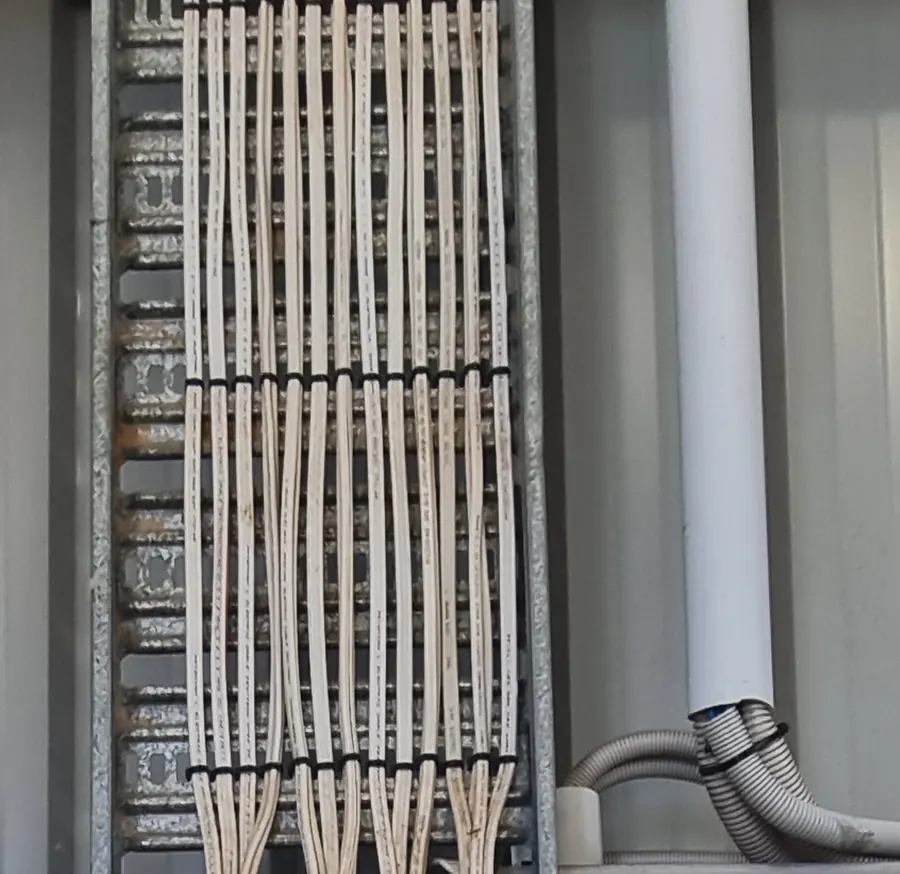
Commercial work is a different discipline to domestic, and most of the difference sits in the distribution. A commercial site generally runs three-phase supply into a main switchboard, with distribution boards fed from it serving separate areas - a workshop, a vehicle shed, an office fitout, a cool room. Faults are traced through that hierarchy rather than at a single board, so the first question on any callout is which board the affected circuit is fed from and what else shares it. Cabling runs in ladder and tray rather than buried in walls, which makes an installation far easier to extend and inspect, but it also means the workmanship is on display: runs need to be dressed, cleated and labelled properly, because the next person working on that site will be reading the installation rather than tracing it back from the outlet. Beyond installation and fault finding, the recurring obligations are what catch businesses out. Portable electrical equipment in a workplace has to be inspected and tested in accordance with AS/NZS 3760, with the interval set by the working environment rather than a single national number - a construction or workshop setting is tested far more often than an office. Emergency and exit lighting carries its own regime under AS 2293, including scheduled discharge testing and a maintained log. RCDs protecting workplace circuits need periodic testing on a defined schedule, and it is the records, not the recollection, that an insurer or an inspector will ask for. Scheduling matters as much as the work itself: most commercial jobs are priced around trading hours, and an after-hours or weekend shutdown is frequently cheaper in total than the disruption of working through a trading day. As with domestic work, commercial electrical installation work requires a Certificate of Electrical Safety, and where the work is prescribed it needs independent inspection as well.
When you need commercial & industrial electrical
- A distribution board is at capacity and a new machine, cool room or tenancy needs feeding
- You are fitting out a shop, office, workshop or warehouse and need the electrical scoped and priced
- Test and tag or RCD testing has fallen overdue and the records need to be defensible
- Emergency and exit lighting is due for discharge testing and a maintained log
- A circuit nuisance-trips under load and takes production or trading with it
How the job runs
- 1
Establish the board hierarchy
Which DB feeds the affected area and how it is fed from the main switchboard. On a multi-board site that is most of the diagnosis before a tool comes out.
- 2
Scope around your trading hours
We work out what genuinely needs a shutdown and what does not, then schedule the disruptive part where it costs you least.
- 3
Install so it can be read
Runs dressed, cleated and labelled, and boards marked up - so the next fault is diagnosed in minutes rather than traced from scratch.
- 4
Test, document and certify
Testing on completion, a Certificate of Electrical Safety for the installation work, independent inspection where the work is prescribed, and records you can hand to an insurer.
What commercial & industrial electrical costs in Ballarat
Commercial work is quoted per job rather than off an hourly rate, and the drivers are whether the supply is single or three-phase, whether the board has spare capacity or needs extending, the cable run and access, and whether the work has to happen outside trading hours. Recurring compliance - test and tag, exit and emergency lighting, RCD testing - is normally priced per item or per fitting with a site attendance charge, so it gets materially cheaper per unit the more you do in one visit. Batching a site rather than calling it in piecemeal is the single easiest saving available.
How do I get commercial & industrial electrical quotes in Ballarat?
Send us the job details and where the property is in Ballarat. We assess the work, explain what needs doing and give you a clear quote before work starts.
Commercial & Industrial Electrical questions
How often does workplace equipment need testing and tagging?
AS/NZS 3760 sets the interval by the working environment rather than giving one number for everybody. The harsher and more mobile the environment, the more frequent the testing - construction, demolition and workshop settings sit at the frequent end, while equipment in a low-risk office environment is tested far less often. The practical approach is to have the intervals set against your actual environments once, then keep to that schedule, because the value of the testing is largely in the records being complete and current when somebody asks for them.
Can the work be done outside trading hours?
Yes, and for anything involving a shutdown it is usually worth it. After-hours and weekend rates are higher per hour, but that is frequently cheaper in total than closing a workshop line or a shopfront during a trading day. The useful thing to work out early is which parts of the job genuinely need power down and which do not - often the disruptive window is much shorter than people expect, and only that part needs to move out of hours.
Other electrical services in Ballarat
We also handle related electrical work across Ballarat. Choose the service that matches the job at hand.
View all electrical work services across Ballarat.