Ballarat & surrounding areas
Electrician in Ballarat
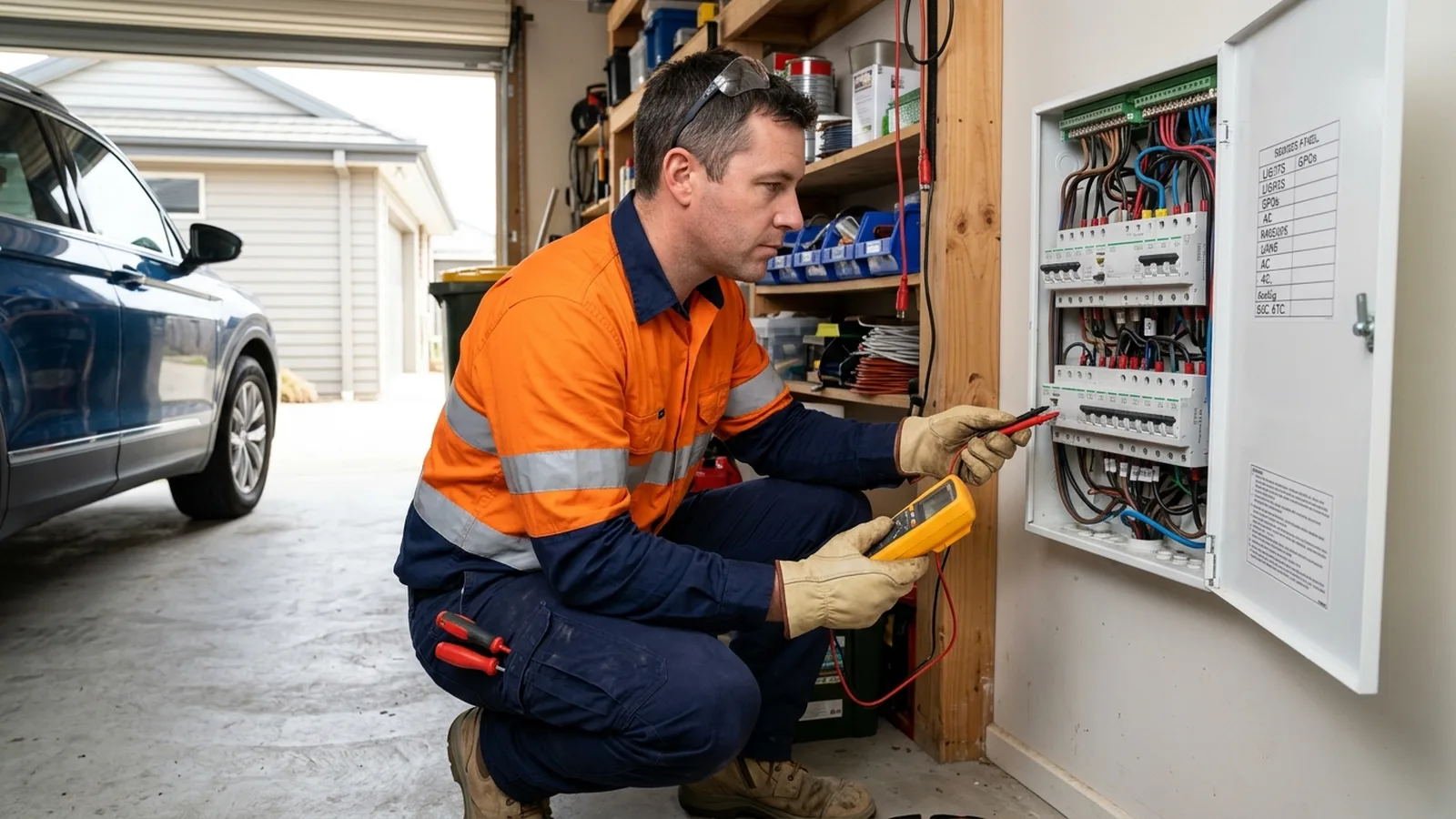
Clear Quotes, Work Explained in Plain Terms
Tell us what you need done. We'll assess the job, explain your options and provide a clear quote.
No obligation · Clear scope before work starts
Get a free quote
A few details are all we need to get started.
Typical Victorian rates
$85-$130/hr standard, $150-$250+/hr emergency, call-out $80-$150
Switchboard upgrade
$735-$2,950, plus $150-$300 independent inspection (prescribed work)
Rental safety checks
Eligible agreements: licensed electrical check at least every 2 years
What we do
Electrician services in Ballarat
Running a workshop, shop, office or warehouse? Our commercial electricians in Ballarat handle three-phase distribution, fitouts, machine connections and the testing records workplaces need to keep current.
Emergency Electrician
Emergency electrician Ballarat: power out, a breaker that will not reset, or a burning smell from the switchboard? We take urgent same-day and after-hours callouts across Ballarat.
View service →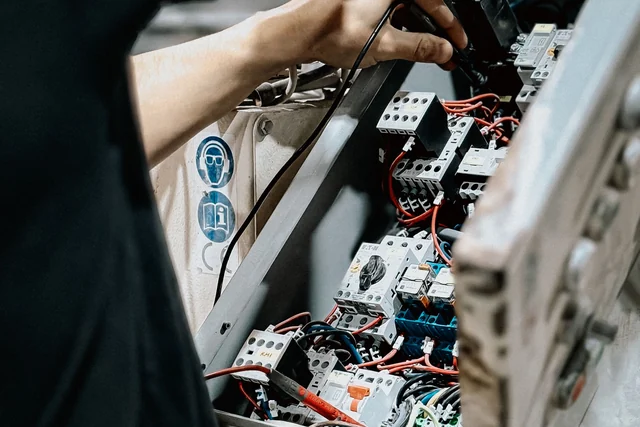
Switchboard Upgrades & Safety Switches
Replacing an old ceramic fuse or rewireable board with modern circuit breakers and RCDs, across Ballarat and the towns around it.
View service →
Rental Electrical Safety Checks
Eligible Victorian rental agreements need switchboards, wiring and fittings checked at least every two years by a licensed electrician. We assess the installation and set any rectification out separately.
View service →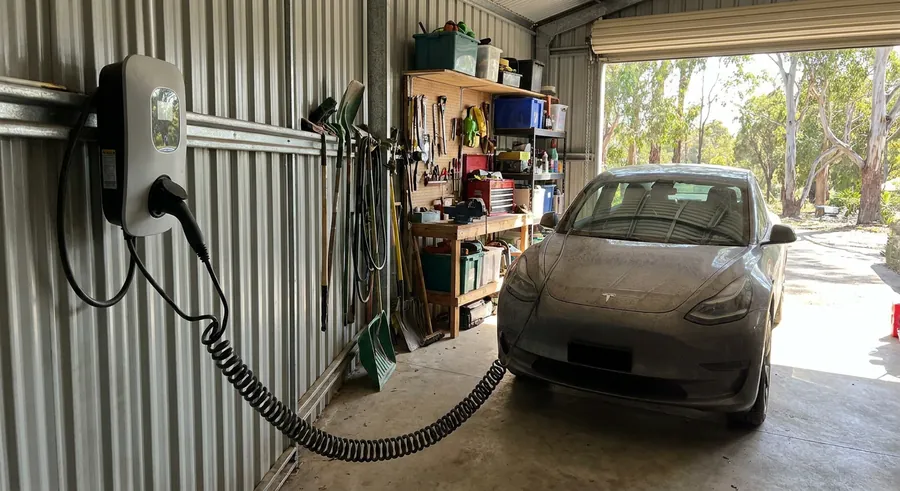
EV Charger Installation
Home wallbox installation for Ballarat EV owners - load assessment, a dedicated circuit and a compliant install with certification.
View service →House Rewiring & Old Wiring Repairs
Ballarat's older weatherboard and Victorian-era homes often still carry aged rubber or VIR wiring. We test what is actually there and quote full or partial rewires.
View service →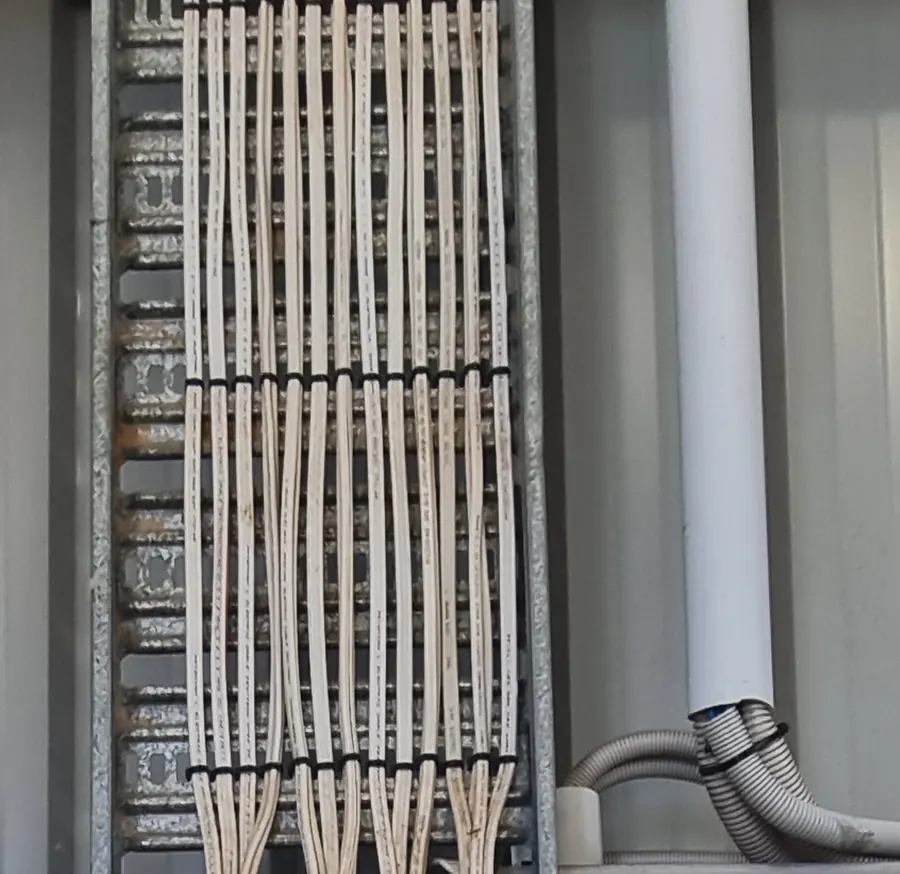
Commercial & Industrial Electrical
Three-phase distribution, switchboard and DB work, fitouts, machine connections and the recurring compliance testing a workplace has to keep on top of.
View service →Test & Tag Services
Portable-appliance inspection, electrical testing and clear records for Ballarat workshops, offices, retail sites and property managers.
View service →Getting started
From your first enquiry to the finished job
- 01
Tell us what you have noticed
The symptoms matter more than the diagnosis - which lights or outlets have failed, whether a breaker stays reset, and what else was running when it tripped.
- 02
We assess it properly
That means opening the board, testing the circuit and finding where the fault actually sits, rather than replacing parts until the symptom goes away.
- 03
You get the scope in writing
What the job involves, what it costs, and anything we found that we think you should know about but that does not need doing today.
- 04
We do the work and certify it
The work is tested on completion and a Certificate of Electrical Safety issued for the installation work, with independent inspection where the work is prescribed.
About our work
Electrical work across Ballarat and the towns around it
We work on Ballarat's housing as it actually is - a lot of it old, much of it altered more than once, and a fair amount of it carrying wiring that was installed to a standard nobody uses any more. That shapes how we quote. A repeat-tripping circuit in a pre-1960s weatherboard is a different problem to the same symptom in a new build out at Lucas, and pricing them the same way does nobody any favours.
More about how we work
The work splits roughly four ways. There is fault finding, which is most of the urgent calls. There is compliance - rental safety checks, switchboard upgrades on boards that no longer meet the requirements for a rented property. There is planned work: added circuits, EV chargers, rewires staged over time where doing the whole house at once is out of reach. And there is commercial and industrial work - three-phase distribution, main switchboard and DB work, fitouts and machine connections, plus the test and tag, emergency lighting and RCD testing a workplace has to keep current.
What ties it together is testing before deciding. Insulation resistance testing on a circuit, tripping an RCD under load, opening a board before pricing the upgrade. It is slower than quoting off a build date and a look at the meter box, and it is the reason our quotes tend to hold.
- The periodic assessment standard a rental safety check is assessed against
- AS/NZS 3019
- Maximum interval for electrical checks on eligible Victorian rental agreements
- 2 years
- How long a rental provider must keep the record — Consumer Affairs Victoria sets no fixed retention period; keep it until the next check's record replaces it
- Until replaced
- A Certificate of Electrical Safety is issued for electrical installation work
- CoES
We test before we quote
The age of a house does not tell you whether it needs rewiring - insulation resistance testing does. It measures whether the insulation between conductors and earth has actually broken down, circuit by circuit, and it turns a rewire from an opinion into a number. That matters in Ballarat, where a lot of quotes get given on the strength of a build date. Sometimes the test says the wiring has years left and only two circuits need attention. We would rather tell you that than sell you a full rewire.
Ballarat's older housing is the work
A large share of this city's homes predate modern wiring standards, and rubber and VIR-insulated cable has a service life that a lot of them have passed. It goes brittle in hot roof spaces and crumbles off the conductor when it is disturbed. Pre-1960s weatherboards through Sebastopol, Wendouree and the older Alfredton streets are the ones that turn up repeat tripping and warm outlets, and knowing what you are likely to find before opening the ceiling is most of doing the job well.
The board gets opened before the price is set
A switchboard quote given without looking inside the board is a guess. What decides the real price is the consumer mains size, the state of the earthing, and whether the existing circuit wiring will pass insulation testing once it is reterminated. Those are the things that turn a straightforward swap into a bigger job, and finding them halfway through is how a fixed price becomes a variation. We would rather spend the time up front and give you a number that holds.
Safety switches get tested under load
Confirming that an RCD is fitted is not the same as confirming it works, and for rental safety checks the standard is explicit that it is not sufficient. An RCD can be present, look perfectly healthy and still fail to trip - which is precisely the failure the test exists to catch. Every safety switch we assess is tripped under load to confirm it operates within the required time, and what it actually did goes in the documentation you keep.
Prescribed work is inspected properly
Switchboard work is prescribed electrical installation work in Victoria, which means an independent Licensed Electrical Inspector has to inspect it and countersign the Certificate of Electrical Safety. That inspection is a real, separate cost, and a quote that quietly leaves it out is not cheaper - it is incomplete. We price it in and tell you what it is, so the number you are comparing is the number you will pay.
You get the certificate
A Certificate of Electrical Safety is issued for electrical installation work, lodged as required, and a copy goes to you. It is your record that the work was done and certified, and it is the thing you will want if you ever sell, insure or rent the property. Ask for it on any electrical job, from anyone.
Nothing starts without an agreed scope
You will know what the job involves and what it costs before any work begins. If the site turns up something we could not see from the outside - undersized mains, a circuit that fails insulation testing - we stop and talk to you about it rather than pressing on and adding it to the invoice.
We will tell you when it is not urgent
Plenty of things that feel alarming are not emergencies, and some things that seem minor genuinely are. A safety switch that trips once and resets cleanly is usually one faulty appliance. Scorching at the switchboard is not something to leave until Monday. You will get a straight answer about which one you have.
Planning your job
Common electrical work questions
How much does an electrician cost in Ballarat?
Victorian electricians typically charge $85-$130 per hour for standard residential work, plus a first-hour call-out fee generally in the $80-$150 range that usually covers travel and 30-60 minutes on site. Emergency and after-hours work runs higher, around $150-$250+ per hour. Common fixed jobs sit in known bands - a switchboard upgrade generally $735-$2,950, plus $150-$300 for the independent inspection prescribed work requires. We put the scope and the price in writing before anything starts, so you are not agreeing to an hourly rate and hoping.
Does electrical work in Victoria need a certificate?
Yes. Under the Electricity Safety Act 1998 and the Electricity Safety (General) Regulations 2019, a Certificate of Electrical Safety must be issued for electrical installation work, completed by a Registered Electrical Contractor or licensed electrical worker, lodged electronically with Energy Safe Victoria, and a copy given to you. For prescribed work such as switchboard upgrades, a Licensed Electrical Inspector working independently of the contractor must also inspect the work and countersign the certificate. Always ask for your copy - it is your record that the work was done and certified.
What are the rules for rental properties in Victoria?
A licensed electrician must check all electrical installations and fittings at least every two years under section 4 of AS/NZS 3019 — currently for agreements entered into after 29 March 2021, including fixed-term agreements that roll into periodic agreements after that date, but from 13 October 2026 the Consumer Legislation Amendment Act 2025 extends that to every Victorian rental agreement regardless of when it started. From 29 March 2023, each power outlet and lighting circuit must also connect to a compliant switchboard-type circuit breaker and RCD. Keep the most recent check record until the next record is created, and provide it to the renter within seven days after receiving their written request.
What should I do before you arrive for an electrical fault?
If there is any burning smell, heat or scorching at the switchboard or an outlet, switch that circuit off at the board and leave it off. Arcing under load is a fire risk and it does not improve while you wait. If a safety switch has tripped, unplug the appliances on that circuit one at a time and try resetting once; if it trips again straight away, leave it off rather than forcing it. Check whether your neighbours still have power, because a whole-street outage is the distribution network's to restore and no electrician can shortcut it. Otherwise leave the switchboard closed and the covers on - tell us what you have noticed, including what was running when it happened, and we will work through it from there.
Where we work
Ballarat & surrounding communities
See all Ballarat service areasBallarat suburb by suburb
Ballarat is not one housing stock, it is several, and which one you live in largely decides what goes wrong with the electrical system and what it costs to put right.
Sebastopol and the older parts of Wendouree carry a lot of the city's pre-1960s weatherboard housing, and that is where aged rubber and VIR-insulated cable turns up most often. The tell is rarely dramatic: a circuit that trips when the heating and the kettle run together, an outlet that feels warm, lights that dim when the oven comes on. In a hot roof space that cable goes brittle and the insulation crumbles off the conductor when it is moved, which is why we test rather than guess before quoting a rewire.
Alfredton spans both worlds. The established streets behave like the older stock; the newer end behaves like an estate build. Delacombe is similar, with a steady run of compliance work - rental safety checks and switchboard upgrades on boards that were adequate when they went in and are not adequate for a rented property now.
Lucas is almost entirely newer housing, so rewiring is rare there and the work is capacity instead: EV chargers, added circuits, and whether the board and consumer mains can carry a continuous 32 amp load on top of everything else the house is already doing. A 7kW wallbox is a heavier sustained load than an oven, and plenty of estate boards were never specified with one in mind.
Mount Clear and Miners Rest sit further out, and the practical difference is access and cable run length. A charger or a new circuit at the far end of a detached garage is a materially different job to one on the wall beside the board, and the run is often the single biggest line in the quote. Telling us where the board is and where the work needs to happen is the fastest way to a price that does not move.
Before work begins
Rental electrical safety checks: when they are due and what they cover
From 13 October 2026, there is a real statewide deadline: every Victorian rental agreement needs a two-yearly electrical safety check, regardless of when the tenancy began.
Up to 13 October 2026, the rule has applied to a Victorian rental agreement entered into after 29 March 2021 — the rental provider must arrange an electrical safety check of all electrical installations and fittings at least every two years, carried out by a licensed electrician, and the same applies when a fixed-term agreement rolls into a periodic agreement after that date. From 13 October 2026, the Consumer Legislation Amendment Act 2025 closes the gap this left: sections 65C-65F inserted into the Residential Tenancies Act 1997 make the two-yearly check mandatory for every Victorian rental agreement, regardless of when it started or how it became periodic. If a renter is moving in and no check has been done in the previous two years, the check should be completed as soon as possible — and from that date, that applies to older tenancies too. Consumer Affairs Victoria is the right place to clarify an individual agreement.
The check itself is a defined assessment, not a look around. It is carried out in accordance with section 4 of AS/NZS 3019:2022, the periodic assessment standard, and it covers the switchboard, the fixed wiring, the power points, the hardwired light fittings and every installed safety switch. The part that separates a real check from a cursory one is the RCD testing: each safety switch must be tested under load to confirm it trips within the required response time. Confirming visually that a safety switch is fitted explicitly does not satisfy the requirement, and an RCD that is present but no longer trips is exactly the failure the test exists to find.
There is a second requirement that catches older Ballarat rentals. Since 29 March 2023, rental properties have been required to have a modern-style switchboard with circuit breakers and safety switches. If the property still has a ceramic fuse board, the check will not simply note it - it is a compliance failure that has to be rectified, and that means a switchboard upgrade rather than an adjustment.
Keep the most recent electrical safety-check record until the record of the next check is created. A copy must be provided to the renter within seven days after the rental provider receives their written request. Before entering a rental agreement, the provider must disclose the date of the last check and any outstanding recommendations. If you manage more than one property, scheduling eligible checks together is easier than tracking dates separately. We quote the check and any likely rectification separately, so you can see the inspection and repair scopes as different decisions.
How to tell whether an old Ballarat house needs rewiring
Age raises the question. Testing answers it - and the answer is often narrower and cheaper than a full rewire.
Ballarat has a lot of housing that predates modern wiring standards, and the cabling in those houses has a service life. Rubber-insulated and VIR cable goes hard and brittle with age and heat, particularly in roof spaces where summer temperatures do most of the damage. Eventually the insulation cracks and falls away from the conductor, often when someone disturbs it running a data cable or installing downlights. Early PVC has its own version of this, hardening and splitting rather than crumbling.
The visible signs are worth acting on: cloth or rubber-sheathed cable in the roof space, insulation that flakes when touched, outlets or switches that feel warm, lights that flicker, and circuits that trip without an obvious cause. Extension leads that have quietly become permanent are a different signal - not necessarily degraded wiring, but almost always too few circuits and too few outlets for how the house is now used.
What settles it is insulation resistance testing on each circuit, which measures whether the insulation between conductors and earth has broken down. It gives a factual answer rather than an opinion drawn from the build date, and it frequently comes back better than expected. That matters, because a full rewire is disruptive and expensive: cabling is run through roof and subfloor spaces and through walls where access allows, and some plaster patching is unavoidable.
Where the testing shows only some circuits have gone, a partial rewire replacing the worst of them is a legitimate staged approach and often the right call. The trade-off is honest - the remaining old circuits will need doing eventually, and some access work gets repeated when they do. We will price the full rewire and the staged option side by side so you can compare doing it once against doing it over time, rather than being handed a single number and left to decide blind. A rewire is also the natural moment to split circuits properly and add the outlets the house has been short of.
What actually moves the price of electrical work
Most of the variation in an electrical quote comes from three things, and none of them is the hourly rate.
Victorian electricians generally charge somewhere around $85 to $130 an hour for standard residential work, with a first-hour call-out fee usually in the $80 to $150 range that covers travel plus the first half hour to hour on site. Emergency and after-hours work runs higher, roughly $150 to $250 an hour and up. Those numbers are worth knowing, but on any job bigger than a minor callout they are not what decides the bill.
The first real driver is what is behind the wall. A switchboard upgrade is broadly a $735 to $2,950 job for a standard home, but that range is wide for a reason: undersized consumer mains, degraded earthing, or aged circuit wiring that will not pass insulation testing once it is reterminated all turn a straightforward swap into a larger scope. This is why a price quoted without opening the board is worth treating carefully - it is not that anyone is being dishonest, it is that the information needed to price it accurately has not been looked at yet.
The second is cable run length and access. On an EV charger this is usually the single biggest line: a wallbox on the wall beside the switchboard is a different job to one at the far end of a detached garage, and the difference is not marginal. The same applies to added circuits, and to rewiring, where a single-storey weatherboard with a walkable roof space is far cheaper to work in than a double-storey with plaster ceilings and no access.
The third is inspection. Switchboard work is prescribed electrical installation work, so an independent Licensed Electrical Inspector must inspect it and countersign the certificate - budget roughly $150 to $300 for that on top of the job. It is a genuine cost and it belongs in the quote. When you are comparing prices, the useful question is not the hourly rate but what has been assumed: has the board been opened, is the inspection included, and what happens to the price if the circuit wiring fails testing.
Let's talk about your job
Clear advice. A written scope. No obligation.